Showing posts with label Waterways. Show all posts

Friday, 13 April 2018

The Water Gates


The Water Gates

My Blogs are like buses, you wait ages for one and then two turn up together. As promised in my last blog here is more detail of the installation of the lock gates at Bacton Wood.
On a cold sunny day in February 2017 the lower gates for the lock at Bacton Wood were lifted into place.
Dog walkers and ramblers watched as the enormous structures were lifted into position in the entrance to the lock. But none of the spectators were aware of the effort it had taken to arrive at this final part of the project.

2nd gate being lifted into position
Work had started on the gates in August 2016. The material of choice was
 Greenheart  timber.   A close grained timber from South America weighing in at around seventy pounds per cubic foot.  
Greenheart is so dense it will not float. The major advantage of Greenheart is it’s resistance to most water-bourne parasites that attack and destroy softer timbers.
Contructing the two gates would require a total of twenty Mortise and Tennon joints cut into the timber frames. Because of the density of the timber, completing three or four  Mortise joints in a day was considered good going. Splinters from Greenheart timber, commonly turn septic due to toxins contained in this most durable of hard woods. 
Greenheart splinters commonly turn septic.
Because each upright weighs over half a ton, a hydraulic lift was essential to manoeuvre them into position. The next task was to cut twenty tennons into the lighter cross members.
These weighed a mere quarter of a ton each.

Completed tennons
 When all the joints had been completed the gates were laid out on the workshop floor. 
Then each one in turn was checked by dry fitting them.  Some were a perfect fit – while others needed some fine adjustment. 
Cargo straps were used to draw the components together and a pinch bar used to part them.
Dry fitting the joints.
Cargo straps used to close the components.
A pinch bar parting the joints.
As well as aligning all the timber components, tie irons also had to be fitted before the gate could be assembled. Each joint was cleaned out with an airline. Then all the cross members and tie irons were aligned ready for the final assembly.

A waterproof, polyurethane adhesive was applied to each joint. 

Applying the adhesive.

Once applied the glue would set within thirty minutes.  Just thirty minutes to align and close all the joints with no second chance.  Any mistakes or delays at this stage would have been disastrous. The physical effort needed to hastily draw all the joints together before the adhesive began to set was  a really tough session.
Drawing all the joints together-a tough session.
January 22nd 2017 dawned cold and frosty. 
A group of Trust volunteers had assembled to plank the gates.  Tannalised Pine was cut to length and laid into position on the gates.
When the planks were in place one hundred pilot holes were drilled through the pine into the frame below.
Drilling pilot holes into the frames.
 The planks were then removed and stacked in order,while the pilot holes were drilled out to a suitable depth in the frame.  
Replacing the planks.

This done, the planks were carefully replaced in the exact position from where they had been removed.  When all the drilled holes were perfectly aligned, the planks were glued into position and screwed down. 

Screwing down the planks.
Constructing the gates was only part of the project.  A means to transport them had to be found.  This was achieved by modifying the brute of an old farm trailer.
 
On the coldest winter’s day of 2017, the volunteers set about converting the trailer.
The conversion was a fairly low tech affair.  In spite of  the trailer’s short comings  it was perfect for the job.  What it lacked in style and elegance was more than compensated for in strength.
Converting the trailer.
The gates weighing almost four tons each were lifted onto the trailer and transported from the yard to the canal. 

Transporting the gates to the lock.
Saturday February 18th.
To lower the water level in the lock chamber a battery of pumps had been running every day for almost a week.

Pumping out the lock chamber.
Intrepid volunteers donned their wellington boots, armed themselves with shovels and ventured into the lock chamber to remove the mud and silt that the pumps couldn’t clear. 
The sludge was loaded into the JCB bucket and lifted out of the chamber.

Volunteers removing the silt from the lock chamber.
When operational, the bottom edge of the gates would traverse over a recess in the floor  of the lock. But the gates could not be lifted into place until the recess had been cleared of water and silt. 
 
The project was falling behind schedule.

Clearing the recess was taking longer than planned and the project was falling well behind schedule.
Eventually by late afternoon the first gate was lifted into position and secured against the lock. 

Sunday February 19th. 
The pumps had been shut down overnight resulting in the water level rising by about two feet in the lock chamber.  Before the second lift could go ahead the water would have to be pumped out.

The recess in the floor of the lock had become submerged again.  So the “bucket and chuck it” brigade was called into action yet again.

By midday the second lift was ready.  
Like clockwork the massive gate was lifted, turned, and lowered into the lock.

Second gate lifted into position.
Good for the next hundred years, the gates will stand as a monument to the folks who built and erected them. 

New gates installed.

A Film of the project can be seen at the Atrium Theatre, Spenser Avenue, North Walsham.
April 24th 2018 as part of the "Canal Film Night".

Monday, 2 April 2018

The Cameras Never Stopped Rolling.

It has been some time since my last blog, this is due to a really heavy workload of filming.   It is not only the blog that has been neglected, there are a hundred and one jobs that need to be finished at home and the car is begging for some TLC.   But the cameras never stopped rolling!

Over the last few months a great deal of my time has been spent on the North Walsham and Dilham canal. The progress on the waterway has been nothing short of astounding.  Since my last blog in June 2016 two of the spillways have been restored and the lower gates at Bacton Wood lock have been manufactured and installed.   Each gate weighs a little over four tons and is built to tolerance of a few millimetres, quite an achievement in itself.

Gates being manufactured

Gates being lifted into position
The gate project took nine months from manufacture to installation.   There are still outstanding tasks to be completed before the gates are in full working order.   But more of this later.

Restoring the Ebridge spillway was another major project running through the summer of 2017.  The spillway was completely over- grown until it was re-discovered in 2005.  This work has had to wait twelve years until The Old Canal Company and the NW&D canal volunteers were able to begin the restoration work.   For two weeks in August the Waterways Recovery Group set up a summer camp to assist with the project. The recovery group travel all over the country to work on canals. 
The entire project took four months to complete.

Trust volunteers installing the spillway timber frames
Waterways Recovery Group laying bricks

Over the last twelve months literally thousands of tons of sub soil have been tipped along a two mile stretch of the canal to consolidate the banks.  Some of this essential work was concentrated on the dry section between Royston bridge and Pigney's wood.  
In spite of the wettest December for years, which produced the most appalling working conditions, the banks were completed in time for a visit from BBC TV.  The crew recorded the re-watering event giving the canal some very welcome publicity.

A dumper with a load of subsoil
The JCB consolidating the bank at Pigney's wood..
Films of all three projects are being shown at the Atrium theatre.
Spencer Avenue, North Walsham. 7.00pm. April 24th 2018. 
Every body welcome!

In my next blog I intend to re-visit these projects in more detail.


Friday, 11 July 2014

Cygnets Take to the Water.


In mid May a pair of young swans built a nest on one of Norfolk's more remote waterways.  For six weeks the Pen sat on the nest including a scorching hot spell in June.  Along with several others I kept watch over the pair in the hope there might be youngsters.  As the pen is a young bird there were no gaurantees there would be a sucessful outcome - it was simply watch and wait.

The Swans nest on the canal.
On my twice weekly visits to the area my first stop was always the swan's nest in the hope there would be something to film.   Several weeks went by without any significant change apart from the cob letting me know he had his eye on me. This was demonstrated from time to time with some slightly menacing hisses followed by some extravagant wing flapping.

On Monday June 23rd I made an extra trip to the nest site - Surprise! Surprise! there was a group of five fluffy little chicks inspecting the nest. 


Five chicks and one egg.
Mum gently turned the one remaining egg while the five cygnets squeaked continuously as they surveyed  the strange world they found themselves in.  It was sheer luck that I had arrived when I did, even better I was just in time to film the chicks entering the water for the first time. 


At the time of writing the chicks are just two weeks old and seem to be doing okay.  There are dangerous times ahead for them. An RSPB survey states that only half the cygnets born reach maturity, predators and pollution account for most of the fatalities. The chicks are on a secluded, private stretch of water and I believe they are relatively safe from human interference. Even so I have chosen not to disclose their exact location as I have long since lost my faith in many kinds of human behaviour. 

"Vaya con dios" little fellows.

To see a video of the cygnets please click the link below.


Wednesday, 1 May 2013

Steel Keel For A Wherry.


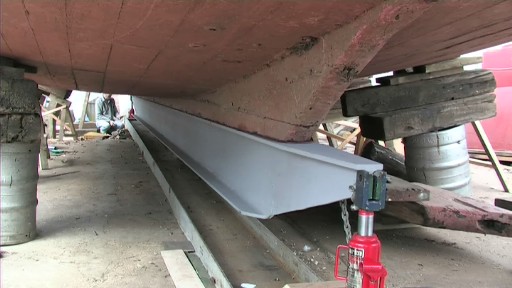
At the WYCCT yard at Wroxham on March 5th 2013 "White Moth" was hauled onto the slipway to have her wooden keel replaced with one of steel.  The wherry yacht "White Moth" was built by Ernest Collins in 1915.  King George V ruled Britain and the commonwealth and Henry Asquith was Prime minister.  Since then, to the best of my knowledge, "White Moth's" wooden keel has survived three monarchs, twenty seven Premierships and two World wars. 

When I was first told "White Moth" was having her wooden keel replaced with steel I thought it would make some interesting film footage - I never realised just how interesting this rare piece of engineering would be.  Having spent thirty years in the aviation industry I am no stranger to the many problems that can present themselves during heavy maintenance.  Remarkably this tricky project worked like clockwork from start to finish as each stage was meticulously planned and executed.

"White Moth's" keel clear of the slipway
The first step was to carefully raise and support "White Moth" clear of the slipway.
Then the old keel was surveyed and measured to ensure the steel replacement would retain the same amount of draught.  The old keel bolts were located and exposed by chiseling away sections of keel allowing the bolts to be cut through.

Profiles were fitted to the thirty two feet, or so, of keel on both port and starboard surfaces.  Then using the profiles as a pattern, shallow rebates were sawn along the entire length of the old keel with an electric saw, forming a guide for the serious surgery that was about to follow. 

The keel undergoing serious surgery

A two - man saw of an undetermined vintage was brought into the daylight for, what I imagine was,  the first time for many moons.  It was akin to the type of saws that were once used in saw pits.   Starting at the stern, the two-man saw began slicing its way efficiently through "White Moth's" ancient wooden keel.   The relentless effort needed to drive the saw through six inches of close grained Pitch Pine was nothing short of hard labour.  In spite of the frequent breaks required in the interests of rest and recuperation the keel was cut through surprisingly quickly.

One half of the two man saw in action

After cutting through the keel only a combination of clamps and wedges held it in place. As the clamps were slackened off  the wooden keel was dropped neatly alongside the slipway track, precisely where  intended.  It was difficult to estimate the exact weight of the old keel, but thirty odd feet of Pitch Pine in free fall could not underestimated.  With this in mind great care was taken to ensure that when the keel fell it did not disturb any of the props supporting "White Moth".  The plan worked perfectly. 

Wooden keel removed
While the old keel was being removed it's metal replacement was being fabricated in the "wet shed".  From there it was suspended by an ingenious arrangement of block and tackle and conveyed over the water.  Finely balanced and resting uneasily on a dinghy the new keel was eventually aligned with the slipway where it was submerged onto the slipway track.  

New keel crossing the water
Accompanied by the familiar sound of the ratchet rattling over the cogs on the winch "White Moth's"  new keel, shark-like in appearance, emerged from the water.  Gradually it was winched up the slipway into position beneath the Wherry yacht.

The new keel was winched up the slipway

The keel was temporarily jacked into position to allow the new keel bolts to be aligned with the fixing points inside the hull and the corresponding points on the keel. 

Keel bolts aligned
Nuts were welded to the upper surface of the metal keel and the keel bolts were turned into them with mole grips.   Everything was now aligned and ready for the keel to be raised and secured to the hull.

Nuts welded to the new keel.
A liberal application of Sikaflex marine sealant was applied to the keel's upper surface to form a watertight seal.  Finally the new keel was jacked into position and bolted down inside the hull.
Job done!

Job done!


Sunday, 17 March 2013

Wherries and Waterways in Winter.

Winter arrived quite late in East Anglia this year and once established it has seemed very reluctant to leave.  The winter sun which can add a real sparkle to film at this time of year has remained hidden behind layers of oppressive grey cloud.   In spite of the poor conditions it has been possible to shoot some film on the better days.

Some of the most interesting footage this winter has been the progress the of the wherry yacht "Olive" being overhauled at Wroxham.   "Olive" was built by Earnest Collins in 1909 and named after his youngest daughter.  She began working as a holiday cruiser for Blakes the same year and continued working until 1958 when she was sold into private ownership.   Now in the care of of the Wherry Yacht Charter Trust  "Olive" was re-floated in February this year looking very spruce as her freshly painted hull slipped into the water.  Such a dramatic change compared to the tired looking craft that had been winched onto the slipway in July last year.  

Re-floating "Olive"

A few days later it was the turn of "Olive's" sister ship, "White Moth", to be winched onto the vacant slipway.  With the exception of the giant airbags I imagine the operation was not so very different from the traditional methods used long ago in the boatyards.  Watching this grand old vessel inching her way up the track  was a fascinating sight.   

Coltishall Boatyard c1900

Hundreds of man-hours are worked on these essentially Norfolk craft through the winter months.
Fingers numbed with cold and breath vapourising in the frosty morning air are just part of the job.


Another of my regular haunts is the North Walsham and Dilham canal. Spectacular progress on the canal has been maintained over the last twelve months.   Work has been concentrated on the dried out section around Bacton Wood and Royston bridge when the weather has permitted.   The very wet December and the January snow has slowed down the determined work parties but not stopped them altogether.

Winter on The North Walsham and Dilham
We have recorded several hours of video on the canal this winter.  The latest footage will soon be added to the series of DVD's which are now available from the NW&D Canal Trust. http://eawa.co.uk/work.html
Details also available from http://bigskyuk.weebly.com/coming-soon.html 


Winter on the canal can be an in-hospitable place when a stiff  North Easterly is blowing across the open Norfolk landscape.  My fingers have turned blue many times this winter operating the camera and my thoughts have often turned to the wherrymen who sailed these waterways in winter.  Imagine slipping the keel in mid January - Hands in ice-cold water removing stubborn bolts. 
Hard as nails!

Wednesday, 1 August 2012

The North Walsham and Dilham. Part two.


Like a vision from a Jerome K. Jerome novel, three men, a canoe and a camera set off from Wayford Bridge  to explore the North Walsham and Dilham canal and paddle up to Honing lock.   Dragonflies and Swallows swooped low over the water ahead of the canoe as we made our way into the main channel.  By sheer good fortune we had picked a perfect day for our trip during  the wettest June for thirty years, bright sunlight with just a hint of a following breeze .

To see a video of our trip along the canal click here.

Great tracts of the North Walsham and Dilham canal have remained derelict and untouched for years since the last wherry traded there in the 1930's.  As nature has encroached and reclaimed the banks and water margins only small craft  are able to navigate the waterway.  This splendid isolation has created a semi wilderness and provided a truly memorable journey for those prepared to make the effort.    The canal still has a generous width at the Wayford end with enough depth to allow cruisers up to the staithe at Dilham.  Fork right (or starboard) at the Dilham turn and the old canal sets off toward Honing, Briggate, Ebridge and Bacton Wood.  Built almost two hundred years ago the canal served the mills along its nine miles.    When it was first opened the canal reached as far Swafield and Antingham but this section was abandoned and de-watered  in 1893.   Currently the only navigable sections are between Wayford Bridge and Honing lock, with a recently opened section from Ebridge mill to Spa Common.

Wayford Bridge
 Our plan was to paddle from Wayford Bridge to the lock at Honing a popular trip for canoeists and the most accessible.   For the first mile or so the canal is fairly wide with overhanging trees, in spite of this prolific canopy  the canal flows beneath an open sky.  Lush green trees confused with blue sky and white clouds reflected in the water and rippled past the canoe as we headed west.   Fallen trees floated out  into the water anchored to the banks by their roots, there was ample clearance to pass them by on these wider sections of the canal.
Fallen trees anchored by their roots.

There are very few man made features along the this stretch of the canal, once the noise of traffic is left behind at Wayford bridge there is a sense of remoteness, of glorious isolation.   We were travelling back in time to the days of the wherries where no clocks or timetables held sway, only wind and tide. 

Our little canoe glided over the water toward Tonnage bridge where a toll keepers cottage once stood.  Every cargo on the canal had to pay tolls at this point with few exceptions.   The original Tonnage bridge collapsed in 1980 but was rebuilt in 1982 with a grant from the Broads Authority. 

Tonnage Bridge

 "Tonnage Long Reach" so named by the early watermen is the stretch of water leading up to Tonnage bridge.  This is a particularly picturesque section of the canal, it was like paddling through a John Constable landscape complete with long horned highland cattle wallowing in the shallows.   It is not difficult to understand why there is resistance to parts of the canal being renovated, who would want to share this idyllic stretch of waterway with the chattering masses if they did not have to?

Onward beyond Tonnage bridge great floating rafts of water-lily's slip beneath our canoe. Lush reed beds line the banks punctuated by overhanging tree branches that gently break the surface of the still water.
The canal winds through open country passing lush, rolling pastures.  Crows call out from a distant wood while a host of dragonflies fly alongside us, the only sounds are birdsong and the rippling water flowing out behind the paddles - priceless!


Around half distance the canal begins to narrow dramatically, the encroaching reed beds grow tall on both banks and threaten to choke the channel.   Decaying trees line the margins their skeletal remains stand stark against the sky.   The breadth of the canal recedes until there is barely enough room to continue.  The reeds stand taller than our canoe, whispering to us as they chafe the gunwale of our little craft as we push through   them.   

The Canal Narrows Dramatically
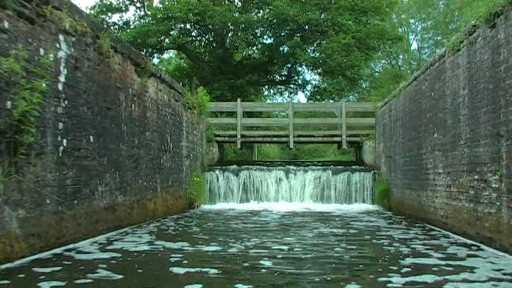
The channel is so narrow we begin to wonder if we will  be able to complete the trip.  Then to our relief the waterway begins to open out again. Small patches of  foam drift downstream warning us that Honing lock is ahead.  As we get closer to the lock the sound of rushing water grows louder and louder and the surface becomes increasingly turbulent.    Around one last bend and the old lock hoves into sight ending what has been a really enjoyable paddle.

Honing Lock

The impressions and views expressed in this article are solely my own and may differ to the views of  land owners and other interested parties along this beautiful canal.


Sunday, 1 July 2012

The North Walsham and Dilham Canal. Part One.


Eighteen months ago I knew very little about the North Walsham and Dilham canal.  It was merely by chance that I stumbled on the EAWA website and saw a notice asking the volunteers to meet at Briggate mill for one of their fortnightly work parties   I thought it would be a good idea take a camera along and see what was going on.  I expected to see a handful of people in wellington boots armed with shovels and forks.   What I did not expect to see were two excavators and a hydraulic tipping dumper, all of them on caterpillar tracks.  By the time I arrived, at about ten o'clock, every machine and volunteer was industriously beavering away.    The task for the day was to continue excavating the old Briggate mill pool, work which had been started many months before.   The chain saws whined as they cut through the fallen trees that blocked the channel where wherries had once moored.  The excavators removed the tree stumps and widened the channel. This was surgery of a serious kind.  It has to be said the area was very boggy and cut up quite badly,  it was this unedifying spectacle that had alarmed some local people.  Now twelve months on the scars have healed and the area is a picture of peace and tranquillity - a beautiful spot to just sit and relax.  The whole place is alive with wildlife, the star turn are undoubtedly the pair of Egrets who fish there regularly. 

                                                             Snowy Egret
                    ( Photograph courtesy of Mike Baird - creative commons licence.)


Click the link below if you would like to see a video of the Egret fishing.
http://www.youtube.com/watch?v=3rrANidG0hQ&feature=plcp

Before 1810 the river Ant was only navigable as far as Dilham but on May 5th 1812 an act of parliament allowed the river to be canalised.   However work did not begin until 1825 and the canal was not formally opened until 29th August 1826.   The waterway was nine miles long from Dilham to Swaffield boasting six locks which raised the water level by some fifty eight feet.  Each lock was designed to allow wherries to pass through them providing their maximum dimensions did not exceed fifty feet in length, twelve feet six inches in  beam and a draught of no more than three feet when laden.      The water source for the canal came from the Antingham ponds but there was never quite enough and there was constant friction between the Mill owners and wherrymen who both felt their need of the available water was the greater..

Freight on the canal included  flour, grain and bone-meal being transported from the mills along the canal to the port of Great Yarmouth. Building materials, manure and marl were brought in the opposite direction.  Coal never became the lucrative cargo that the share-holders of the canal had hoped it would be.   Colliers continued to unload coal on the beaches at Happisburgh and Cromer and from there it was brought overland by horse drawn waggons denying the canal significant income.

Tolls for all freight carried on the North Walsham and Dilham were collected at Tonnage bridge.  The bridge  collapsed in 1980 but was replaced true to its original design in 1982 with the help of a grant from the Broads authority.


Attempts were made to improve trade on the canal with the introduction of pleasure boating.
Edward Press a miller at Bacton Wood, (who later bought the canal),  owned  five wherries he converted some of them  to pleasure wherries and operated them out of his yard at Ebridge.
Ebridge Today
It was the East Norfolk Railway that signalled the beginning of the decline in the canal's fortunes when the line from Norwich to North Walsham was opened in 1874.   As a direct result of  diminishing returns the section of canal from Swafield lock to Antingham was abandoned in 1893.  Buried in Swafield church  is the grave of  Jack Gedge skipper of the "Gleaner". His headstone is inscribed "the last wherryman", he died in 1989 aged one hundred, a gentle reminder of the halcyon days on the canal.

Jack Gedges Headstone at Swafield
 The canal has changed hands many times, one of the most notable was the purchase by Edward Press who paid £600 for the canal in 1886.  A lawyer named James Turner was appointed to pay off the shareholders but he decided to keep the money for himself and absconded with the funds.
 
The North Walsham and Dilham escaped the great flood of August 1912 with relatively little damage , unlike the Aylsham navigation which was totally wiped out as a navigable waterway.   For the NW&D the only notable flood damage was a major breach in the bank at Bacton Wood and part of the road was washed into the canal at Ebridge.   None of the flood damage was severe enough to halt trade on the canal although the breach at Bacton Wood was never repaired successfully as there were never sufficient funds due to falling revenue.

Honing Staithe Today
 In 1921 Cubbitt and Walker bought the canal and formed the North Walsham canal company.
Trade continued on the North Walsham and Dilham - day books from 1923 show that six wherries hauled 2,300 tons of  grain and fertiliser.     By 1931 only one wherry was left trading on the canal, the "Ella", she completed 83 trips and moved 1,600 tons.  In 1934 "Ella" left Bacton Wood with a cargo of barley,  the very last load ever carried on the North Walsham and Dilham.
("Ella" was the last trading wherry to be constructed - built at Allens yard at Coltishall in 1912)

Restoration Work at Bacton Wood

The North Walsham and Dilham has a colourful past but what of its future?  The aim is to restore as much of the canal as possible to a navigable waterway, progress has been spectacular in the short time I have been following the project.  The enthusiasm of the volunteers is truly astonishing, whether they are up to the waist in muddy water or working in reedbeds infested by stinging insects their progress is unstoppable.    I believe the old canal is destined to become a priceless example of reclaimed heritage which will be enjoyed by generations to come. 

The EAWA are always pleased to welcome any folks who would like to be involved in this ambitious and exciting project.  For more details visit their website   http://eawa.co.uk/walsham.html

To see a video clip of progress on the NW&D http://youtu.be/Dji1tQdZ22w